Tag: mental-health

  • Lately I’ve been in my head too much.

    Lately I’ve been in my head too much.

    Lately, my brain has been loud. Not in a creative, let’s-write-50-ideas-down kind of way, more like anxious, overthinking, spiraling-at-2am loud. I’ve been feeling off: low energy, sad for no clear reason, and kind of disconnected from myself.

    Some days, I wake up ready to go. Other days, I stare at the ceiling wondering how I’m going to make it through the day. And honestly? It’s exhausting.

    I’ve been trying little things to get out of my head, because if I sit in the noise too long, it swallows me whole. Here are a few things I do that sometimes help (keyword: sometimes):

    Walks with no destination. I’ll put on a random playlist, leave my phone on “Do Not Disturb,” and just wander. Something about moving my body without a plan makes me feel lighter.

    Driving around. Weirdly therapeutic. Even if I don’t have anywhere to go, I’ll just roll the windows down and drive. Bonus points if the sun is setting.

    Journaling… but not cute Pinterest journaling. Just messy word dump on paper. It’s not about being profound, it’s about getting the chaos out of my head and onto the page.

    Little treats. A smoothie, an iced coffee, a snack I usually wouldn’t buy. It sounds small, but it’s like telling myself, “Hey, I see you. You’re trying.”

    Comfort shows. Sometimes I don’t need advice or motivation. I just need The Vampire Diaries or some other comfort show playing in the background while I zone out. Currently binge watching comedy films and classic sitcoms.

    Reading – There’s something about diving into another world that calms me down. Right now, I’m reading On the Road by Jack Kerouac, and it’s been exactly the vibe I need, messy, adventurous, imperfect, but somehow freeing. It reminds me that life isn’t about having it all figured out, it’s about actually living it.

    I guess what I’m learning is that it’s not about fixing my mental state in one big move. It’s about small resets, tiny moments that remind me I’m human and that I’ll get through this wave.

    If you’ve been feeling stuck in your head lately, just know you’re not alone. We’re all just figuring it out, one messy journal entry and one iced coffee at a time.

  • The simple things that help me mentally.

    The simple things that help me mentally.

    Let’s be honest, life can get loud. There are moments when everything feels like too much and other times where it’s just this dull, empty static. In those in-between moments, I’ve found that the things that help me mentally aren’t always grand or Instagram-worthy. They’re the soft, simple, solo rituals that bring me back to myself. No guru, no subscription needed.

    Here’s my (not-so-secret) list of little things that actually help when my brain needs a breather:

    Solo matcha dates
    There’s something healing about sitting alone with a warm drink and no pressure to perform. Just me, my thoughts, and the creamy comfort of a homemade matcha (or the overpriced but emotionally necessary café version). It’s less about the drink, and more about giving myself permission to just be.

    Reading in the sun
    Nothing recalibrates my mind like reading outside. It feels romantic and slow and slightly European. Bonus points if I’m wearing sunglasses and pretending I’m the main character in a coming-of-age film. It’s the simplest escape, and my brain? Loves it.

    Beach walks
    Barefoot if possible. Hoodie on, hair messy, ocean air in my lungs. It’s not about hitting 10k steps. It’s about remembering the world is bigger than my overthinking. The waves don’t care about my inbox. And that’s kinda beautiful.

    Hiking
    Not for the aesthetic. For the quiet. For the burn in my legs that reminds me I’m alive. For the moment I reach the top and realize I didn’t check my phone once. For the grounding reminder that nature isn’t in a rush, and I don’t always have to be either.

    Painting
    I am not Picasso or anything. That’s the point. I grab some paints, maybe some cheap brushes, and just throw colour around until something makes sense, or doesn’t. It’s messy, freeing, and not for anyone else’s eyes. Which makes it kind of sacred.

    Writing poetry
    Sometimes I just write one line. Sometimes a whole page. But when my thoughts feel tangled, poetry unties the knot. It doesn’t have to rhyme or be “deep.” It just has to be honest.

    Yoga
    The real kind. The “I just rolled out of bed and my mat is dusty” kind. Some mornings, it’s five minutes. Other days, I stay in child’s pose for what feels like a lifetime. It’s less about flexibility and more about feeling my body again.

    Journaling
    My therapist in a notebook. It’s raw, repetitive, and sometimes wildly dramatic. But it helps. Getting the chaos out of my head and onto the page makes everything feel lighter. Less scary. Less stuck.

    Couch days
    Because sometimes mental wellness looks like doing nothing. Lying horizontal with a comfort show playing in the background. Fuzzy socks on. Snacks within arm’s reach. No pressure to be productive, just a reminder that rest is part of the process.

    None of these things “fix” me.
    They don’t make the anxiety disappear or magically erase bad days. But they help. They soften the edges. They give me space to feel, reset, and come back to myself without the pressure to be anyone else.

    If you’re feeling overwhelmed, disconnected, or just a little tired of being a human, try starting small. Sit in the sun. Paint something weird. Walk by the water. Do it just for you.

    Because healing doesn’t always look like a breakthrough.
    Sometimes, it just looks like a quiet moment with a matcha.

  • The trip that saved my mental health.

    The trip that saved my mental health.

    Howdy friends

    So… I recently took a trip that honestly changed everything. Not in a huge, dramatic, life-turning-upside-down kind of way. But in that slow, subtle, soul-shifting kind of way. The kind that reminds you what it actually feels like to be alive, not just functioning.

    I’ve been in hustle mode for a few years now. Wake up, create content, tick off the to-do list, try to keep the algorithm happy, try to keep myself together… and somewhere along the way, I forgot how to pause. I mean really pause. I forgot what it felt like to not be performing productivity 24/7. Like, when was the last time I did something just because I wanted to, not because it needed to be documented, edited, posted, or optimized?

    Let me tell you: a few days on a farm with no real plans, no pressure, and no phone signal will humble and heal you real quick.

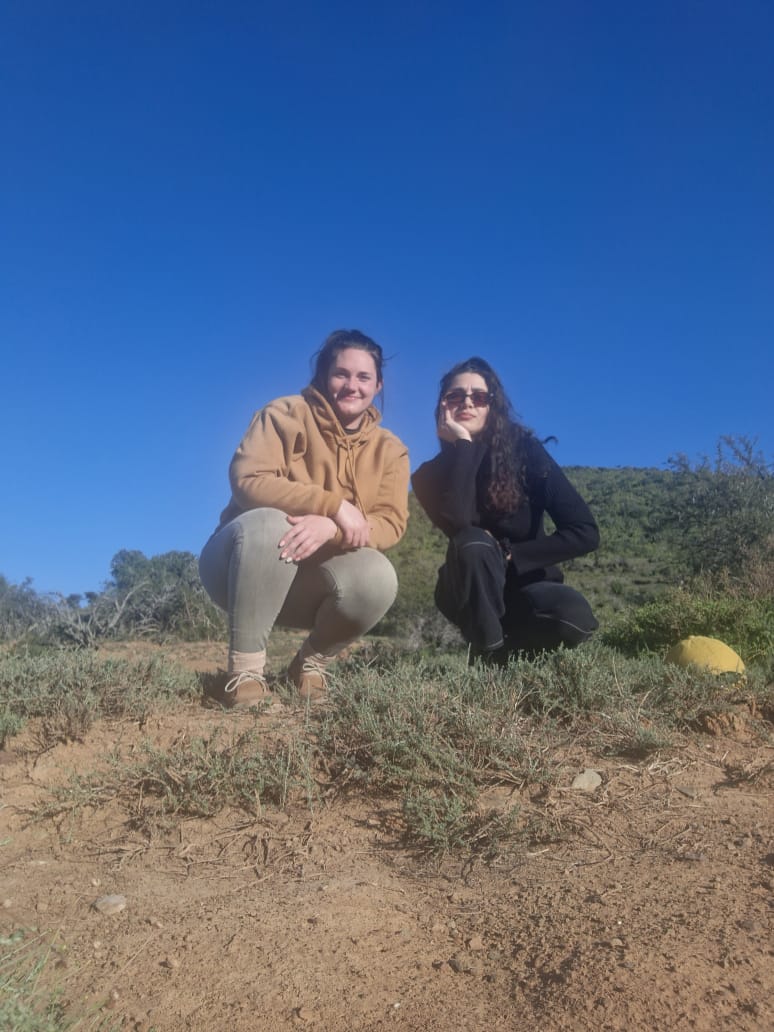
    The trip was for my friend’s birthday, just a bunch of us, a car packed with snacks, and a long drive into the middle of nowhere. I had my headphones in, the mountains were rolling by, and for the first time in a while, I didn’t feel the need to check my phone. It was just me and my thoughts… which, if you’re like me and have an extra chatty brain, can feel like a lot at first. But after a while, something softened. I started to settle.

    We stayed in this big old farmhouse surrounded by open fields and animals and that crisp kind of mountain air that feels like therapy. We’d wake up early (like… sunrise early), explore the land, walk until our legs ached, and just be. No notifications. No chaos. Just conversations by the fire, good food, shared laughter, and the kind of silence that feels full instead of empty. The stars at night were unreal. Like movie-scene unreal. And I remember thinking, “This. This is what I want more of.”

    And that’s when it hit me, how much I’ve been craving presence. Like real, grounded, I’m-actually-here presence. Not “here, but thinking about five other things.” Not “here, but worried about who saw my story.” Just… here.

    When I stepped away from the routine, the social media, the constant noise, I finally had space to hear myself again. I could actually feel what I’d been too busy to notice: how tired I was. How overstimulated. How I’ve been using productivity as a distraction from my own feelings. How healing isn’t always about doing more, it’s about feeling safe enough to stop doing.

    Which brings me to this thing I’ve been learning about (and slightly obsessing over): nervous system regulation.

    Here’s the deal: your nervous system is basically your internal thermostat for safety. When you’re overwhelmed, anxious, or stuck in go-go-go mode, your sympathetic system (aka fight or flight) takes over. It’s like your body thinks you’re constantly under threat, even when you’re just answering emails. But when you’re grounded, calm, and feeling safe, your parasympathetic system (rest and digest mode) kicks in. That’s where real healing happens. That’s where you can actually feel good.

    On the farm, I was unknowingly regulating my nervous system every single day:
    ☁️ Waking with the sun
    🌲 Walking in nature
    🧘🏽‍♀️ Sitting in stillness without performing it
    🔥 Laughing by the fire
    ⭐️ Staring at the stars with no agenda

    And slowly, I realized: this is the kind of peace I want to build into my everyday life. Not just something I escape to once a year. But something I create in small ways every day. A little pocket of calm here. A moment of joy there. A breath, a pause, a decision to put the phone down and pick presence up instead.

    Here’s the truth: you don’t need to go off-grid or live on a farm to feel this. You just need to remember you’re allowed to stop performing. You’re allowed to rest. To feel. To be soft. To enjoy things that don’t look productive but feel peaceful.

    So now, I’m in this new season, still healing, still figuring things out, still craving slowness. I’m not trying to “fix” myself all the time. I’m just trying to feel more like myself. I want to spend time with people who calm my nervous system, not trigger it. I want to create, but not at the expense of my joy. And I want more memories that feel like that trip: unfiltered, unshared, mine.

    If you’ve been feeling stuck in survival mode or like you’ve forgotten how to just be, maybe this is your sign to step back. Take a day. Or even just an afternoon. Go outside. Sit in silence. Turn your phone off. Make something with your hands. Water your plants like it’s a ritual. Make a smoothie and drink it without scrolling. You don’t have to earn rest. You just have to remember that you deserve it.

    Thanks for reading. I hope this gave you that little breath of fresh air you’ve been needing. You’re not broken. You’re just tired. And I promise, stillness isn’t scary once you let it hold you.

    Until next time, breathe, rest, and romanticize the boring stuff. That’s where the magic really is. 🤍


  • Me vs. my brain (and how I’m learning to deal with OCD)

    Me vs. my brain (and how I’m learning to deal with OCD)

    Some days I feel like my brain has a mind of its own.

    One minute I’m brushing my teeth or walking down the street, and the next… BAM.
    An intrusive thought crashes in, loud, weird, terrifying, and completely out of nowhere.

    If you’ve ever dealt with OCD, especially the kind that involves obsessive thoughts, you’ll get it. The thought feels so real. So intense. And then comes the guilt spiral:
    “Why would I even think that?”
    “Does that mean something about me?”
    “What if I can’t make it stop?”

    It’s exhausting. And lonely. And sometimes it feels like I’m fighting my own mind with no way out.

    But here’s what I’m learning:

    1. Intrusive thoughts don’t define you.

    This was the hardest truth to accept. OCD is a liar. It throws the most disturbing, wild, irrational thoughts your way just to see if you’ll take the bait.
    You’re not broken for having these thoughts. You’re not bad. You’re just dealing with a brain that’s a little more sensitive to the “what ifs” of life.

    What’s helped me is labeling it in the moment. “This is just an intrusive thought. It’s my OCD. It’s not me.” That simple pause can stop the spiral from turning into a full-on storm.

    2. Resisting the urge to ‘solve’ it.

    OCD loves when you try to fix it. It feeds off reassurance, mental reviewing, googling, and checking.
    But the more I try to find certainty, the more trapped I feel.

    So now, I try to let the thought just… exist. I acknowledge it, cringe a little, and then gently refocus my attention. It’s uncomfortable, but temporary.

    My mantra? “I don’t need to figure this out right now.”

    3. I’m not “cured,” but I’m coping.

    OCD isn’t something I’ve conquered. It still shows up uninvited. But it doesn’t control me like it used to.
    I’ve learned to coexist with the chaos in my head, and I’m proud of that.

    Some days are hard. Some thoughts still scare me.
    But I’m learning to choose curiosity over panic.
    Compassion over shame.
    Progress over perfection.

    If you’re struggling with intrusive thoughts too, please know you’re not alone. You’re not weird. And you’re definitely not your OCD.

    You’re just a human with a beautifully complex brain, learning how to take your power back, one gentle breath at a time.

  • 3 ways to live life that feels like you.

    3 ways to live life that feels like you.

    Life is messy, beautiful, confusing, and sometimes just plain exhausting. And honestly? There’s no one “right” way to do it. But after a lot of trial and error (and some awkward detours), I’ve found a few simple ways to live that actually feel like me, and maybe they’ll resonate with you, too.

    1. Show Up for Yourself, First.

    Before you can really show up for anyone else, you have to be in your own corner. That means honouring your needs, feelings, and boundaries, even when it’s uncomfortable. It’s saying “no” without guilt, carving out time to recharge, and choosing what lights you up instead of what drains you. When you prioritize your well-being, the rest falls into place more easily.

    2. Embrace the Uncertainty.

    Life rarely looks like the perfect plan. Sometimes, things get messy, and that’s okay. Instead of fighting the unknown or trying to control every detail, lean into the uncertainty. Be curious about what might happen next. Growth happens in the in-between spaces, not just the clear-cut milestones. So take a deep breath, trust your gut, and remember: it’s okay not to have all the answers.

    3. Create Your Own Definition of Success.

    Forget society’s checklist of success, the perfect job, the “right” relationship, the dream house. Your version of success might be slower, softer, and way more aligned with your values. Maybe it’s about meaningful connections, creative projects, or just waking up feeling calm and grateful. When you define success on your own terms, you stop chasing and start being.

    Living life your way isn’t about having it all figured out. It’s about choosing what matters to you, even when it feels scary or unconventional. It’s about being kind to yourself through the highs and lows and trusting that you’re exactly where you need to be.

    Here’s to living a life that feels less like a checklist, and more like you.

  • Female friendships in adulthood.

    Female friendships in adulthood.

    Adulting is hard. Between careers, relationships, self-care routines, and everything else, keeping friendships alive can sometimes feel like a full-time job, and honestly, it kind of is. But healthy female friendships? They’re everything. They’re the tribe that holds you up, makes you laugh when you want to cry, and reminds you that you’re never really alone.

    Here’s the truth: maintaining friendships as adults isn’t about constant texts or weekly hangouts. It’s about quality over quantity, real connection over surface-level “likes,” and showing up in ways that matter.

    Here’s how I keep my friendships healthy, honest, and meaningful, even when life gets chaotic:

    1. Make Intentional Time (Even if It’s Small)

    Life gets busy, and “catching up” can sometimes mean a quick text or a 20-minute phone call. That’s okay. The key is being intentional. Schedule those little moments, even if it’s just grabbing coffee or sending a thoughtful message, to remind your friends they matter. Quality beats quantity every time.

    2. Be Real, Always

    Adult friendships thrive on authenticity. That means showing up with your messy, imperfect self. Share your wins, your struggles, your bad days, and your good ones. Vulnerability deepens connections and builds trust, even if it feels uncomfortable at first.

    3. Respect Boundaries

    Everyone’s energy ebbs and flows. Sometimes your friend needs space, and that’s okay. Respecting boundaries, whether it’s around time, topics, or emotional capacity, keeps friendships sustainable and loving, rather than draining.

    4. Celebrate Each Other’s Growth

    Adult friendships evolve as we do. Instead of comparing where you each “should” be, celebrate the different paths and milestones. Whether it’s a new job, a tough decision, or a mental health breakthrough, being your friend’s biggest cheerleader is a superpower.

    5. Let Go of Guilt

    Maybe you missed a call, canceled plans, or haven’t spoken in a while. It happens. Let go of the guilt. True friendships survive silence, and sometimes life just takes over. What matters is the intention to reconnect and keep showing up when you can.

    6. Have Fun, No Pressure

    Friendships don’t always have to be deep conversations or emotional support. Sometimes, the best moments come from doing nothing serious, laughing over bad movies, crazy exes, dancing in the kitchen, or sending memes that make no sense.

    Friendships in adulthood aren’t perfect, but they’re worth the effort. They remind us who we are beyond the hustle, anchor us when things feel heavy, and bring joy when we least expect it.

    If you’re feeling disconnected, don’t overthink it, just reach out, be honest, and remember that real friendships aren’t about always being present, but about being present enough for each other.

    Because at the end of the day, it’s those bonds that keep us sane, inspired, and whole.

  • Q3 energy = soft goals + steady growth.

    Q3 energy = soft goals + steady growth.

    Somewhere along the way, we decided that planning your life had to feel like a part-time job.
    Colour-coded calendars. 5am alarms. Daily “power hour” blocks and quarterly vision boards.

    Cute in theory. Exhausting in reality.

    So here’s a radical idea:
    What if Q3 didn’t need to be your grind era?
    What if it could be your soft launch season, the one where you slow down, tune in, and grow at your own pace?

    That’s where I’m at.

    I’m calling it my “slow mornings, soft goals, steady growth” era. And no, it’s not a fancy routine with 17 steps. It’s more like a gentle rhythm I can return to when life feels a little loud.

    Here’s what it actually looks like:

    Slow mornings.

    Not “no mornings.” Just… slower ones.
    Ones where I actually pause before reaching for my phone. Where I write something down, make coffee, open a window. Where I let the day greet me instead of chasing it.

    You don’t need a 6-step skincare routine and a sunrise yoga flow (unless you love that). Sometimes, it’s enough to just sit with yourself for a few minutes and breathe.

    Soft goals.

    Not lazy goals. Not vague goals. Just goals that don’t make you want to cry.

    I’ve stopped trying to do all the things at once. Now, I pick 2–3 focus areas for the quarter, things that genuinely matter to me. Things I want to grow, not force.

    It’s less “reinvent your life in 30 days” and more “what can I pour into, slowly and meaningfully?”

    Steady growth.

    This is the part no one talks about.
    The quiet wins. The baby steps. The kind of progress that doesn’t show up on Instagram but feels huge in your own life.

    For me, that means checking in once a week.
    Not to critique, but to reflect:

    • What actually worked this week?
    • What felt off?
    • Did I move in the direction of the life I want?

    I do this with a notebook. Or sometimes in the notes app. Or on a walk. No rules, just realignment.

    We’re so used to pushing for more that we forget how powerful it is to move with intention instead of urgency.

    So if your brain’s been loud lately, if the world feels like a group project you didn’t sign up for, this is your sign to slow down. Pick a few things that matter. Create a rhythm that supports your peace, not just your productivity.

    Because Q3 doesn’t have to be a sprint.
    It can be the season where you finally stop rushing and start savouring.

  • Are you a Ward or a mouse?

    Are you a Ward or a mouse?

    It’s a line I’ve heard my whole life.

    “Are you a Ward or a mouse?”

    My dad would say it half-jokingly, usually when I was having a meltdown, too scared to take the shot, or spiraling in self-doubt. It wasn’t said to dismiss my feelings, but to remind me of who I am. Of what I’m made of. And more importantly, who I’m capable of becoming.

    At the time, I would just laugh. I mean, hello, let me cry in peace. But now, as an adult, I carry those words like armour.

    Because life is going to knock you down. More than once. There will be days where you question your worth, your path, your abilities, days where everything feels like too much. And in those moments, that little voice echoes in my mind:

    “Are you a Ward or a mouse?”

    Not just a name, not just a catchphrase, but a reminder. That I’m not here to shrink. That I’ve survived things I thought would break me. That fear might visit, but it doesn’t get to drive.

    And maybe you didn’t grow up with that exact phrase, but I bet you’ve got something like it buried deep inside you. A voice that tells you: you’re stronger than you think.

    So how do you tap into that when everything feels heavy?

    Here’s what helps me:

    1. Say it out loud.
    Seriously. Say the phrase, or your version of it. Words have power. Speaking it reminds your body who you are. (Even if you’re crying while doing it. Especially then.)

    2. Do one brave thing.
    Send the email. Go to the gym. Post the thing. Apply for the job. Start the business. Take the step, even if your hands are shaking. Courage isn’t loud, it’s often the quiet decision to keep going.

    3. Make a ‘proof list’.
    Write down three things you’ve overcome. Three moments you were scared, but did it anyway. Let your past remind you that you’ve got receipts for your resilience.

    4. Move.
    Walk. Dance. Stretch. Move the energy around. Sometimes the shift happens not in your mind, but in your body.

    5. Let someone hype you up.
    Text your friend. Call your dad. Watch that YouTube video or listen to the podcast that always lifts you. Borrow someone else’s belief in you until you can feel your own again.

    Being brave isn’t about being fearless, it’s about feeling the fear and showing up anyway.

    You don’t have to roar to prove you’re strong. You just have to choose not to hide.

    So next time life tries to knock you back into your shell, ask yourself the question that’s been passed down in my family for years:

    Are you a [insert your last name]… or a mouse?

    And then remind yourself:
    You were never meant to be small.

  • When you’re tired of feeling everything all the time.

    When you’re tired of feeling everything all the time.

    Some days, I genuinely don’t know how I got out of bed.
    It’s not laziness. It’s not a lack of gratitude.
    It’s the heaviness that sits in your bones when your mind is in overdrive and your heart feels way too full.

    I’ve always been someone who feels deeply. The kind of person who reads between the lines even when no one asked me to. Who notices the shift in someone’s tone, the way their eyes flicker when they say “I’m fine.” Who can feel the energy in a room shift before anyone else does. And while that sensitivity can be a gift, it can also be so exhausting.

    Some days I love my own company. I romanticize my solo walks, matcha mornings, creative work sessions, and quiet evenings. But other days? The silence feels deafening. I look around and realize I don’t have people to share life with the way I want to. And the independence I’m usually so proud of suddenly feels like a wall I didn’t mean to build.

    It’s a strange place to be, craving connection but feeling misunderstood. Wanting to open up but feeling like no one would really get it.
    So you keep it all in. You carry it quietly.
    You smile, you work, you post.
    And underneath it all, you’re screaming into the void, just hoping someone might feel it too.

    I don’t have a magic answer for this.
    But I do know that feeling a lot doesn’t make you weak. It means you’re awake. Alive.
    It means you’re still in tune with the parts of yourself that this world hasn’t numbed.

    You don’t have to “fix” yourself for feeling too much. You don’t have to shrink or harden or pretend things don’t get to you. What you need is grace. Space to feel what you’re feeling without trying to justify it or wrap it in a bow.

    And if you’re in a season right now where everything feels a little heavy, where your bed feels safer than the world, and your thoughts feel louder than your voice, just know this:
    You’re not alone. You’re not dramatic. You’re not broken.
    You’re just feeling your way through it.

    And that’s more than enough for today.

  • How to quiet your inner hater.

    How to quiet your inner hater.

    (Because she’s loud, dramatic, and usually wrong)

    You know the one.
    The voice that pops up the second you start to feel good about yourself.

    “You really think you’re gonna pull that off?”
    “She’s way better at that than you are.”
    “Maybe just… stay small today.”

    That voice?
    That’s your inner hater. And we all have one.

    Some days she whispers, some days she yells. But either way, she’s exhausting, and most of the time, she’s not even telling the truth.

    So how do you quiet her down without pretending she doesn’t exist?

    Here’s what’s helped me:

    1. Catch her in the act.

    The first step is noticing when she shows up. It’s usually in moments of growth or vulnerability. A new opportunity, a first date, a creative idea you’re excited about.
    She’ll try to keep you “safe” by talking you out of anything that feels unfamiliar.

    But once you name her—”oh hey, it’s that self-doubt again”, you take away some of her power.

    Awareness = distance.

    2. Talk back… like a friend would.

    Would you let your best friend say that sh*t to herself? No.
    So when your inner critic spirals into “You’re not good enough,”
    try this instead:
    “Actually, I’m doing the best I can.”
    “This feels hard, but I’m still showing up.”
    “I don’t have to be perfect to be proud of myself.”

    You don’t need to lie to yourself. You just need to be kinder.

    3. Take the action anyway.

    Your inner hater thrives on inaction.
    If you stay stuck, she gets to stay in charge.

    But when you do the thing, launch the blog, go to the event, wear the outfit, say the thing, you collect evidence that she’s wrong.
    That you’re capable. Resilient. Worth listening to.

    And the more evidence you collect, the quieter she gets.

    Your inner critic isn’t bad, she’s just outdated.

    She’s running on old fears, old stories, old insecurities.
    But you? You’re growing. You’re evolving. And you get to rewrite the narrative.

    So the next time she tries to talk you out of your own potential, take a deep breath and remember:

    She’s loud, but you’re louder.

    You’ve got this.
    Even if your inner hater disagrees.