Tag: mental-health

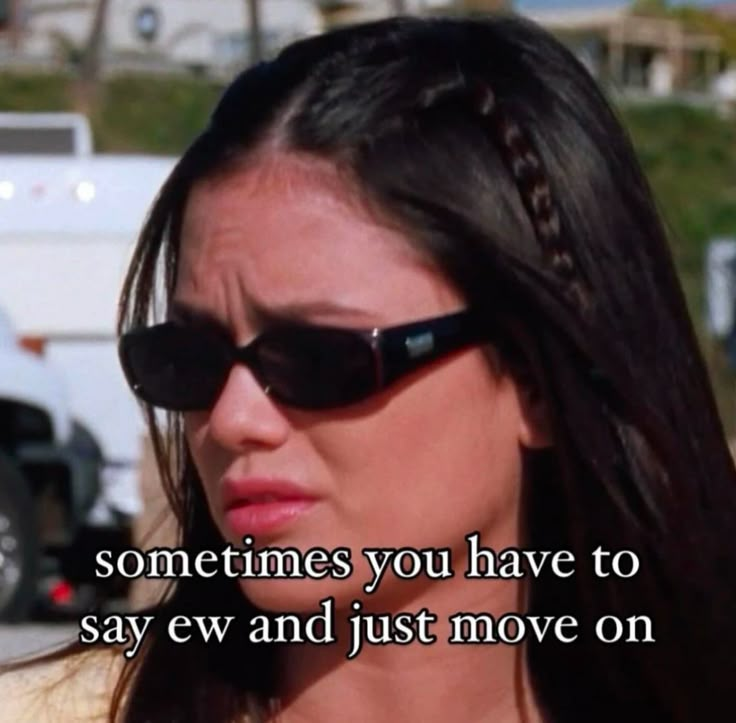
  • Sometimes you just have to say “ew” and move on.

    Sometimes you just have to say “ew” and move on.

    There comes a moment in adulthood when you stop overanalyzing, stop giving people chance after chance, and just say: “Ew. No. I deserve better.”
    It’s not about being cold or heartless, it’s about protecting your peace, your self-worth, and the future version of you that’s tired of being drained by the same cycles.

    Sometimes the most powerful thing you can do is look at a situation, whether it’s a friendship that’s gone stale, a relationship that constantly chips away at your confidence, or a family dynamic that’s been toxic for years, and just decide:
    “This will be the last time I allow this to make me feel small, confused, or not enough.”

    That’s it. That’s the moment things shift.
    Not because anything external has changed, but because you have.

    We talk a lot about boundaries, but rarely about the moment they are born. And often, it’s not in a calm, meditative state, it’s in a burst of raw clarity.
    A “this is so not it” kind of clarity.

    Maybe it comes after another disappointing conversation.
    Another ghosted text.
    Another moment where you realize you’ve been tolerating crumbs when you deserve a full damn meal.

    And that’s when you say it, “ew.”
    Not out loud, maybe. But inside, in your gut, where the truth lives. And you move on.

    It’s about being done.
    Done explaining your worth.
    Done shrinking to fit in.
    Done making excuses for people who show you time and time again who they are.

    You’re allowed to walk away from anything that doesn’t feel good anymore.
    Even if it’s been in your life for years. Even if it looks “fine” on the outside.
    You are not obligated to keep showing up for patterns that make you miserable.

    This goes beyond romantic relationships.

    • That friend who never celebrates you, but always wants your energy when they’re low? Ew.
    • That family member who constantly throws backhanded compliments or dismisses your dreams? Ew.
    • That ex you keep circling back to because “maybe this time it’ll be different”? You already know. Ew.

    You’re allowed to outgrow people. You’re allowed to choose peace over nostalgia.

    Adulthood isn’t about having it all figured out. It’s about knowing what you won’t tolerate anymore.
    And sometimes the most radical act of self-respect is to say, “This doesn’t feel right, and I’m not doing it anymore.”

    Let people think you’re too sensitive.
    Let them think you’ve changed.
    Because you have, and that’s the point.

    This chapter of your life doesn’t need more apologies. It needs more honesty.
    It needs boundaries that don’t shake.
    It needs you to look around and decide: “If it’s not good for my energy, my peace, or my growth… I’m out.”

    Say ew, mean it, and move on. Your future self will thank you.

  • Letting go of what no longer serves you.

    Letting go of what no longer serves you.

    Your 30s hit different.

    You start craving things you didn’t even think about in your early 20s, like peace, stability, better friends, better food, and a deeper connection with yourself. You start realizing how much noise you’ve tolerated. How many people, habits, and thoughts you’ve kept around simply because you didn’t want to rock the boat.

    But here’s the truth: If it’s draining you, it’s not for you.
    And letting go isn’t dramatic, it’s growth.

    Whether it’s the situationship that’s been stringing you along for way too long, the job that feels like soul dust, the inner critic that’s been living rent-free in your head, or even the group chat that leaves you feeling weirdly off after every message… you’re allowed to outgrow what no longer aligns.

    In fact, you’re meant to.

    Here’s the mindset shift:

    Letting go isn’t losing something. It’s choosing you.

    It’s choosing to make space for better. For things that feel reciprocal. For people who clap when you win. For opportunities that don’t leave you second-guessing yourself. For the version of you that actually feels good to be in.

    Because holding onto things that no longer serve you?
    That’s the real self-abandonment.

    3 ways to start letting go (and not feel bad about it):

    1. Get radically honest.
    Ask yourself: Is this helping me grow, or is it keeping me stuck?
    Sometimes we stay attached to patterns because they’re familiar, not because they’re good for us. Getting honest with yourself is the first step to creating change.

    2. Set boundaries without guilt.
    You don’t have to explain your growth to everyone. You’re allowed to create space without writing a five-paragraph apology text. Boundaries are not walls, they’re bridges to a better version of you.

    3. Let it feel uncomfortable.
    Letting go is not always graceful. Sometimes it looks like crying in your car, deleting a number, unfollowing someone you still care about, or sitting with silence instead of seeking chaos. But that discomfort? It’s where your power builds.

    You’re not too much for wanting more.
    You’re not behind for pivoting in your 30s.
    You’re not selfish for choosing peace.

    You’re just growing into the version of you who knows her worth, and refuses to shrink to fit where she no longer belongs.

    And that version of you?
    She’s not afraid to let go anymore.

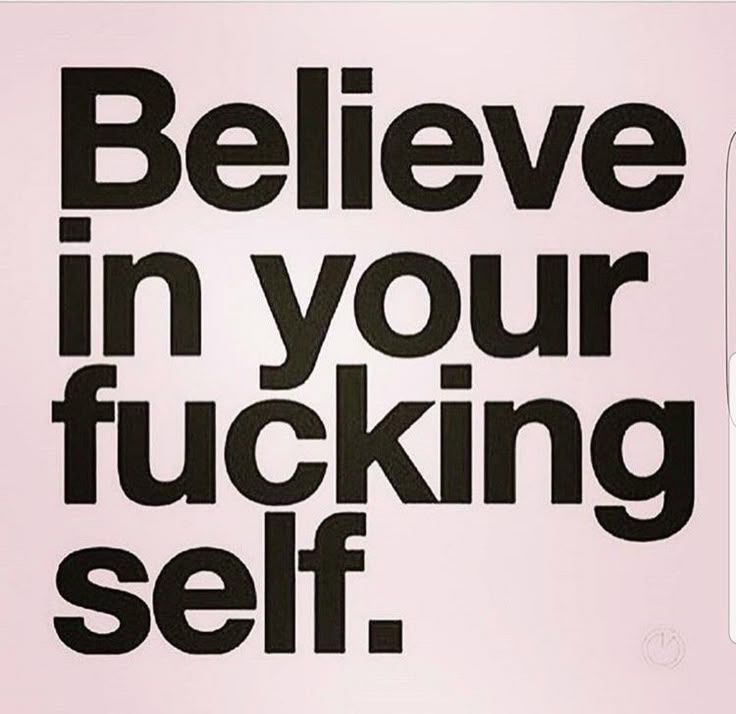
  • Believe in your f*cking self (even when it’s hard)

    Believe in your f*cking self (even when it’s hard)

    I’ve wanted to give up more times than I can count.

    Not in a dramatic, “the world is ending” kind of way, but in that quiet, everyday way where you’re just tired. Of trying. Of pushing. Of feeling like nothing’s working. I’ve felt sorry for myself. I’ve let self-doubt spiral me into silence. I’ve told myself stories like “maybe I’m not cut out for this” or “maybe they’re right about me.”

    It’s so easy to let limiting beliefs win. To let other people’s opinions define how big you dream or how loud you speak. But here’s the truth I’ve had to learn (and keep relearning): you don’t get the life you want without believing that you can actually have it.

    Even on the days you feel like sh*t.
    Even when it’s easier to stay in bed.
    Even when you don’t feel “inspiring” at all.

    Believing in yourself is a daily choice, not a one-time decision. And some days, it’s really hard. But if you want the life you keep imagining in your head, you have to keep showing up for it, even when it’s uncomfortable.

    Here are two powerful, real-world ways I get myself into a better mindset when I want to quit:

    1. get brutally honest about the story you’re telling yourself
    When I’m in a rut, I write down what I think is true:
    → “No one cares about what I’m doing.”
    → “I’m behind.”
    → “I’m not good enough.”

    Then I ask myself: Is this helpful? Is this actually true? Or is this fear in a trench coat pretending to be logic?
    Most of the time, the story is BS. Once I call it out, I can rewrite it. Try it, it’s like a personal intervention on paper.

    2. move, even if it’s small
    I don’t mean run a 5k. I mean: get outside, clean your space, take a shower, make your favorite breakfast. Momentum matters. When I physically shift my environment or body, my mind usually follows.
    No, it doesn’t fix everything. But it reminds me that I’m not powerless. That I can create change, even if it starts small.

    Some days I still don’t want to get up. Some days I’m not the most confident version of myself. But I keep going. And you can too. Because life isn’t about being perfect, it’s about choosing not to give up on yourself, not letting other people bring you down, even when no one’s clapping, even when you’re not in the mood to be motivational.

    So yes, believe in your f*cking self.
    Especially when it’s hard.
    Especially when it’s quiet.
    Because that’s when it matters the most. Never give up. Period.

  • I hate change (but I hate being stuck more)

    I hate change (but I hate being stuck more)

    Letting go of a past relationship feels like being asked to erase a chapter of your life that still smells like your favourite candle and sounds like your shared playlist. It doesn’t matter if it ended amicably, messily, or somewhere in between, it still lingers. The what-ifs. The familiar routines. The comfort of knowing how someone takes their coffee or laughs at dumb memes.

    And if you’re anything like me, change isn’t something you run toward. It’s something that feels like it’s ripping the floor out from under you. I hate it. I really do. I hate the uncertainty, the silence after someone you used to text 20 times a day disappears, the “starting over” part. It’s exhausting. But what’s even harder? Staying stuck in something that no longer exists. Clinging to a version of life that isn’t real anymore.

    It’s okay to admit it hurts. It’s okay to admit you miss them. And it’s okay to take your time. But eventually, gently, you have to come back to yourself. To the version of you that existed before them. To the version that will exist after.

    Here are 3 healthy, realistic ways to start focusing on yourself post-breakup, no toxic positivity, no glow-up pressure, just you, healing:

    1. romanticize the little things.
    Make your morning coffee like it’s your love language. Go on walks like you’re the main character in an indie film. Light candles. Listen to sad music. Listen to happy music. Create an atmosphere in your day that makes you feel good, even if it’s small. You don’t need a full rebrand, you just need to start caring for yourself like someone you love.

    2. do something that requires your hands.
    Paint. Cook. Build something. Garden. Journal. Rearrange your room. There’s something healing about doing something physical that gets you out of your head and into the present. It won’t magically fix everything, but it’ll remind you that your life is still yours. That you can still create something out of the mess.

    3. reconnect with people who remind you who you are.
    Not people who want to talk about your ex for hours, but the ones who make you laugh really hard, who text you to go to a random coffee shop on a Sunday, who make you feel like yourself again. Healing isn’t about isolation. It’s about choosing better connection.

    4. go blonde (I might be kidding)
    Sometimes, healing starts with bleach. Or bangs. Or a bob. Changing your hair doesn’t solve everything, but it can give you that subtle “I’m back, and I don’t care” kind of energy. It’s symbolic. It’s fun. It reminds you that you’re in control, and that you’re allowed to reinvent yourself as many times as you want.

    Change sucks sometimes. It’s hard. It’s messy. And if you hate change, like I do, every part of it might feel like a fight. But you deserve a life that feels like yours again. One where you don’t have to pretend to be over it, but where, one day, you’ll notice that you kind of are.

  • The concept of escapism.

    The concept of escapism.

    In my early 20s, escapism looked like late nights, glittery eyeshadow, vodka with ice, bad decisions, and dancing until my shoes gave out. I loved it, probably a little too much. I’d romanticize those neon-lit hours where nothing mattered except the music and whoever you were clumsily making eye contact with across the room. Then I got into my first real relationship, and surprise, we both loved the nightlife. It became our thing. Our escape. Our reckless little corner of freedom from the “real world.”

    And honestly? Those were some of the best times of my life.

    But I think the version of escapism we crave evolves as we do. I’ve outgrown the hangovers, but I still chase that feeling, freedom, disconnection, presence. Just… now it looks a little different.

    Now it’s relaxing with a good book and letting someone else’s story carry me away. It’s listening to a podcast that actually makes me think (or laugh at something completely unhinged Theo Von says). It’s long drives to the beach with Blink-182 or Charli XCX blasting, windows down, mind quiet. It’s laying on the couch on a Sunday afternoon, watching the light shift across the room, and letting that be enough.

    Escapism isn’t about avoidance, it’s about release. And the healthier it becomes, the more grounded we feel coming back to ourselves.

    Here are 2 ways I’ve found that actually help when life gets too loud:

    1. Creative expression.
    Write something. Paint something. Doodle like you’re 10 again. It doesn’t have to be good, honestly, it probably shouldn’t be. Just let your brain play. There’s something magical about making something that doesn’t need to mean anything.

    2. Intentional silence.
    Put your phone away. Don’t even reach for it. Go sit outside. Take a walk. Lay on your bed with a cup of tea and stare at the ceiling. Silence is awkward at first, but it teaches you how to just be. And that’s a skill a lot of us forgot we needed.

    Because sometimes escaping isn’t about running away, it’s about running toward yourself.

  • How to survive (and actually enjoy) a festival as a sober wellness girly

    How to survive (and actually enjoy) a festival as a sober wellness girly

    Because yes, you can have fun without being three drinks deep and losing your phone.

    Let’s be real, music festivals are loud, dusty, chaotic… and also kind of magical. But when you’re the sober, water-sipping, SPF-reapplying friend who starts talking about their sleep schedule at 9pm, it can feel like you don’t belong.
    Spoiler: you do.

    You’re allowed to love live music, dance until your feet hurt, and romanticize the glitter on your cheeks without having to chug vodka Red Bulls or pretend you’re vibing with that one random DJ set your friend dragged you to. In fact, going to a festival as a wellness girly (sober or not) might just be your secret superpower.

    So here are 3 tips to make the most of it:

    1. romanticize the prep like it’s your Coachella-era main character moment.
    Hydrate. Pack the snacks. Take your magnesium the night before. And do not underestimate the power of cute, comfy clothes that still feel you. Think: linen pants, oversized sunnies, a bikini top, your go-to combat boots, and a tiny shoulder bag with electrolytes and SPF lip balm. You’re not just going to a festival, you’re stepping into a vibe.

    2. find your people.
    Whether you’re going with a sober-curious crew or your front-left friend group, energy matters. Make plans with people who actually want to be there and won’t pressure you into drinking. Dance the night away, and then head home when you feel like it. No guilt.

    3. create your own kind of high.
    Who said being sober means being boring? Drink your overpriced coconut water, get lost in the bass drop, scream your favorite lyrics, and ground yourself in the moment. The dopamine from live music, sun on your skin, and connection with the crowd? That’s real. And the best part? You’ll remember all of it the next day (plus: no hangover anxiety).

    The truth is, you don’t need alcohol to have a good time. You need aligned energy, good music, and a tiny bit of delusion that you’re starring in your own indie coming-of-age documentary.

    So go dance, stay grounded, drink your damn water, and be that girl in the crowd glowing from the inside out.
    Sober and sparkling. Who says you can’t be both?

  • Comfort might be the vibe, but it’s not where the growth is.

    Comfort might be the vibe, but it’s not where the growth is.

    Let’s be honest: comfort is tempting. It’s warm. Familiar. Safe. It’s the “I’ll just stay here where I know what’s going on” mindset. The job that doesn’t light you up, but pays the bills. The routine that keeps you from spiraling, but also keeps you stuck. The “maybe next week” energy when it comes to going after the thing you actually want.

    And look, there’s nothing wrong with wanting stability. Or loving your cozy routines. But if I’m being real with myself (and you), staying comfortable has never been what helped me grow. It just helped me avoid.

    Because growth? It’s awkward. Messy. Slightly unhinged. It looks like imposter syndrome. It sounds like overthinking your first YouTube upload or voice shaking through a pitch. It feels like discomfort, uncertainty, and that annoying little pit in your stomach that whispers, “What if this doesn’t work out?”

    But also, what if it does?

    That’s the thing about comfort: it keeps you safe, but it also keeps you small. It’s the voice that says, “You don’t need to try that. Just stay here.” But staying “here” means never finding out what could be possible if you just pushed through the awkward phase. Or took the risk. Or said yes before you felt fully ready.

    Because spoiler: you’re never really ready. You just get brave enough to start anyway.

    So if you’ve been feeling stuck or stagnant, maybe it’s not because something’s wrong with you. Maybe it’s just time to shake things up. Change your routine. Say the scary yes. Get uncomfortable on purpose. It might suck at first, but eventually you find your rhythm again, and you’ll realize you’ve grown into a version of yourself you didn’t even know existed.

    Comfort is nice. But you weren’t made to live in “nice.”

    You were made to evolve.

  • Feel it all (even the messy stuff).

    Feel it all (even the messy stuff).

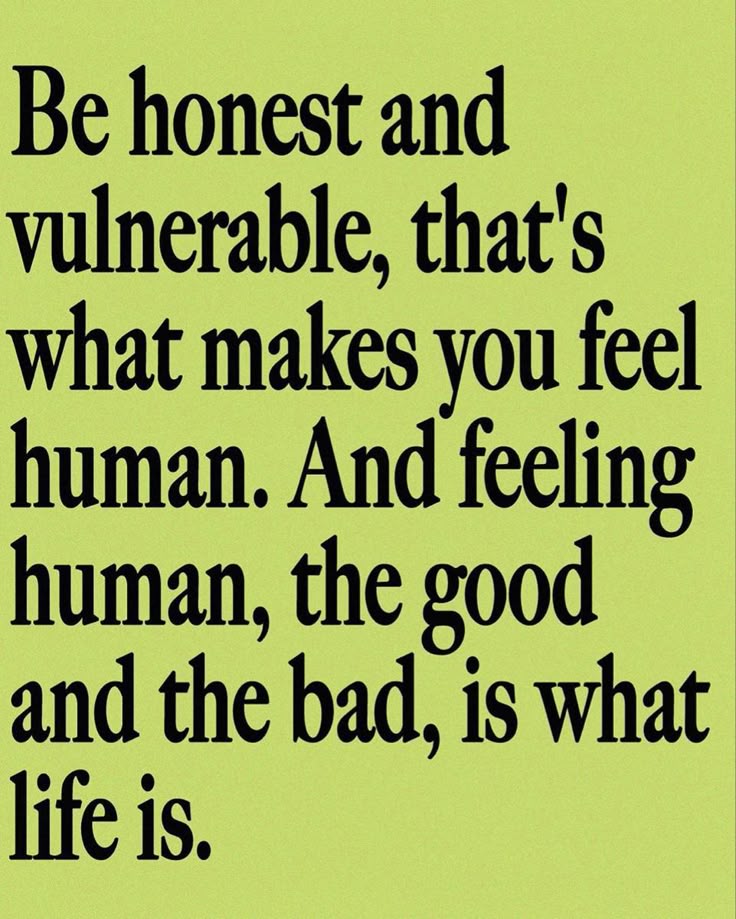
    If there’s one thing I’ve learned, sometimes the hard way, it’s that being honest with yourself is non-negotiable. Like, no one wins when you pretend everything’s fine and bottle it all up. Vulnerability isn’t weakness. It’s actually what makes you feel human. And feeling human, the highs, the lows, the “what am I doing with my life” spirals, that’s literally what life is. The full experience.

    You’re not supposed to be happy all the time. (Wouldn’t that be exhausting anyway?) But when you’re in a bad mood or feeling stuck, the goal isn’t to “fix” it immediately, it’s to understand it, move with it, and then gently guide yourself back to a better place.

    Here are 3 simple ways I’ve learned to shift my energy when I’m not in the best headspace. No toxic positivity, just real stuff that helps:

    1. Say it out loud

    Literally just… say it. To a friend, into your Notes app, or out loud while you pace your kitchen. Naming what you feel gives it less power. “I’m overwhelmed.” “I feel sad and I don’t know why.” “I’m just in a mood today.” You don’t have to solve it immediately, just let it out.

    2. Get outside (even if you don’t want to)

    Fresh air does more for your brain than Instagram quotes ever will. Go outside. Walk around the block. Touch some grass. Sit in the sun. It’s not about being productive, it’s about shifting your environment so your thoughts have room to breathe.

    3. Do one tiny thing that makes you feel like you

    Not ten things. Not a whole to-do list. Just one. Maybe it’s making a smoothie. Or blasting your favourite playlist. Or doing your skincare routine mid-afternoon, and convincing yourself you’re the main character. It doesn’t have to be deep, it just has to reconnect you to you.

    Bad moods pass. Good moods come back. And the more honest you are with yourself through it all, the more peace you’ll feel in the long run.

    So feel the feels. Be dramatic in your Notes app. Go for a walk. Then come home, throw on a face mask, and remember: being human is the whole point.

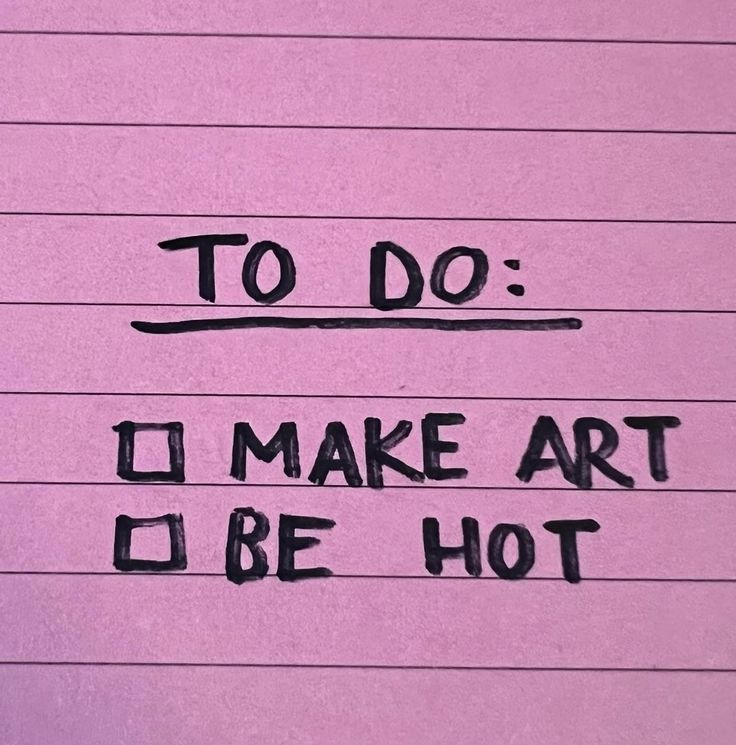
  • Make art. Be hot. Period.

    Make art. Be hot. Period.

    I’ve loved art for as long as I can remember.
    Not in a look at me way, but in a quiet, personal way. The kind of love that feels like it’s stitched into who you are without needing to be explained.

    Growing up, I found comfort in poetry, in reading writers like Jack Kerouac and George Orwell, who somehow put feelings into words in a way that made the world feel a little more understandable. I wasn’t the best at math, I didn’t always feel like the smartest person in the room, but give me a blank page or a set of paints, and I felt like I had everything I needed.

    I think that’s the beauty of creativity. It’s freeing.
    It’s not about being perfect or impressive, it’s about being present.
    When I sit down to paint or draw just for the sake of it, when I write messy poetry, I’m not trying to prove anything. I’m just existing. And in a world that constantly asks you to perform or produce, creating for no reason at all feels like the most powerful thing you can do.

    Art has always been a way for me to stay connected to myself. It’s healing in the way that being outside is healing, like when you take a walk, breathe in the fresh air, and realize how small your worries feel compared to the open sky.
    It’s the same feeling I get when I journal after a long day, literally unloading the noise inside my head onto a page and making space for something lighter.

    Creative expression reminds me that I don’t have to have everything figured out. I don’t have to be the smartest, the most organized, or the most logical. I just have to show up and be myself.

    That’s enough.
    It always has been.

    If you’re feeling a little lost (or just brain-fried), seriously… go make something.
    It doesn’t have to be good. It doesn’t even have to make sense.
    Paint something weird. Write the worst poem ever.
    Just create for the hell of it.
    You’ll be shocked at how much lighter you feel after.

  • Make your mind a happy place to be.

    Make your mind a happy place to be.

    You spend your whole life living inside your head, it might as well be a good place to hang out.

    Lately, I’ve been thinking a lot about this. About how important it is to not just survive in your own mind, but actually enjoy being there. To feel safe, light, encouraged, even when things outside of you feel messy, uncertain, or downright chaotic.

    Because no matter where you go, what you achieve, you’re the only one who has to live with your thoughts 24/7. Might as well make it a cozy place to be, right?

    For me, that’s looked like learning to be kinder to myself. Less judgmental. Less of a negative critic and more of a best friend. It’s realizing that beating myself up for not being “perfect” doesn’t actually get me anywhere faster, it just makes the journey heavier.

    It’s about celebrating the small wins instead of rushing past them. Talking to myself like someone I actually like. Giving myself permission to mess up, start over, pivot, or simply rest without drowning in guilt.

    It’s realizing that peace isn’t found in ticking every box or chasing every shiny thing, it’s built in the tiny, invisible choices I make every single day:

    • The way I talk to myself after a bad day.
    • The way I let myself dream without immediately questioning if I’m “good enough.”
    • The way I forgive myself when I fall short.
    • The way I choose to believe that good things are still ahead.

    And sometimes? Making your mind a happier place means stepping outside of it for a bit.
    Getting out into the fresh air.
    Feeling the sun on your face.
    Taking a walk, breathing deep, moving your body, letting nature remind you that life is bigger (and more beautiful) than whatever spiral you’re stuck in.

    Journaling helps too (trust me), getting those messy, chaotic thoughts out of your head and onto paper where they don’t feel so heavy. Sometimes when you see it all written down, it’s easier to breathe through it. Easier to remind yourself that you’re not your worst day or your scariest thought.

    Making your mind a happy place doesn’t mean you’ll never have bad days. It just means you build a foundation strong enough to weather the storms without losing yourself.

    It’s realizing you deserve a mind that feels like home.
    And honestly? It changes everything.

    Because when your mind is a good place to be, the outside world gets a little less scary. You trust yourself more. You dream bigger. You move forward, even when it’s hard.

    At the end of the day, life gets a whole lot better when you like the person you’re living it with.

    And that person is you. Period.