Tag: personal-development

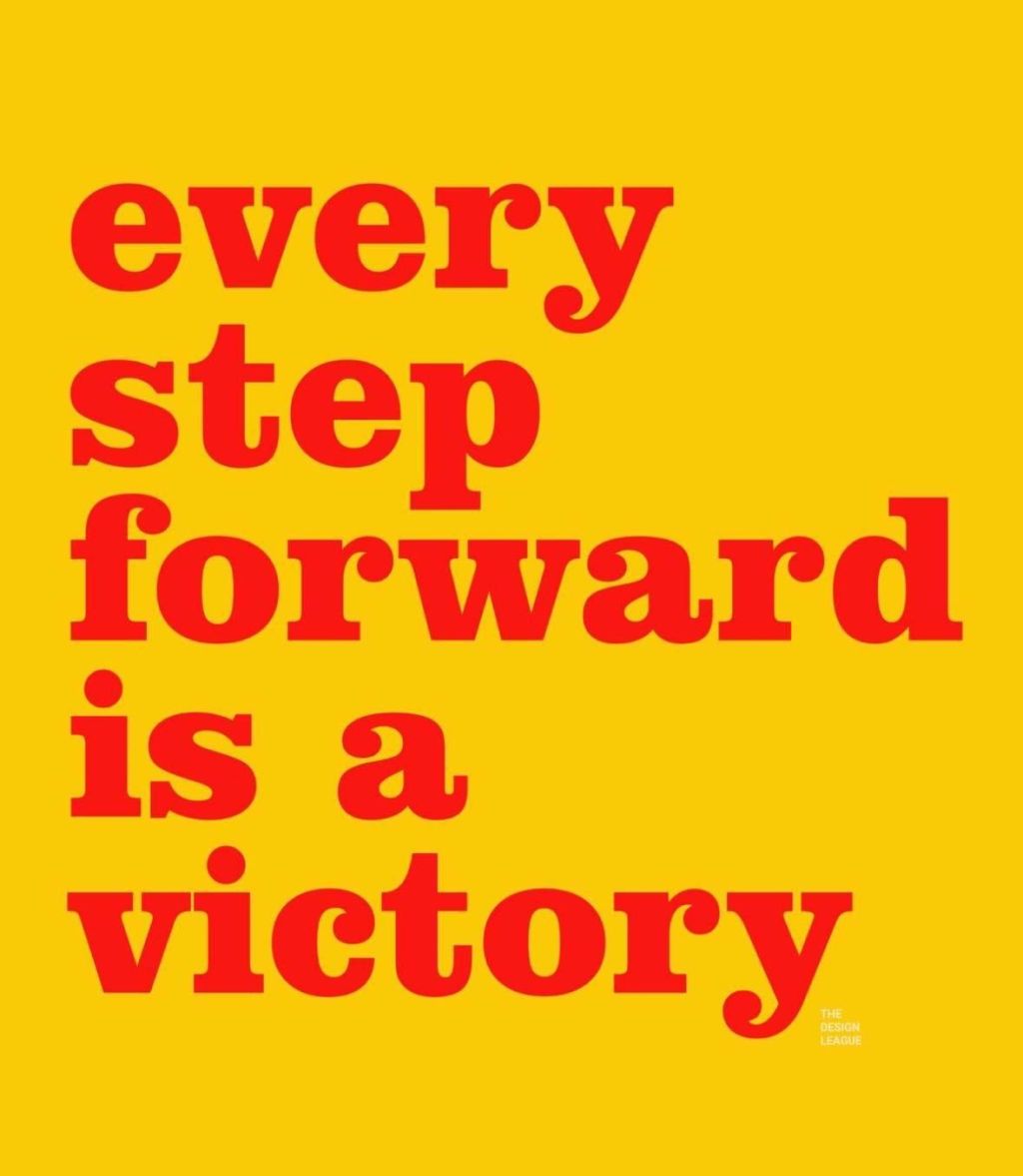
  • Every step forward is a victory. Here’s why.

    Every step forward is a victory. Here’s why.

    We live in a world obsessed with the “big wins.” Landing the dream job. Hitting 100k followers. Finally moving into the Pinterest-perfect apartment.

    And while all of that is amazing, the truth is most of life happens in the in-between, the small, sometimes unglamorous steps no one claps for.

    But here’s what I’ve been realizing: every step forward counts as a victory.

    The problem with “all or nothing” thinking?

    How many times have you brushed off progress because it wasn’t the big thing?

    • “I only wrote one page today.”
    • “I went for a 15-minute walk, but it’s not like I ran a marathon.”
    • “I pitched one client, but I didn’t land ten.”

    We act like progress only matters when it’s massive. But the big moments are literally just stacks of small ones.

    Every time you choose to show up, whether it’s sending the email, journaling for 5 minutes, or just deciding not to give up, you’re building proof. Proof that you’re consistent, that you’re learning, that you’re moving.

    And the brain loves proof. It’s like tiny receipts that add up to self-trust.

    That’s why those little steps aren’t “meh.” They’re victories. They’re you proving to yourself that you’re capable of more than your fear wants you to believe.

    Every step forward, no matter how small, is a win. And when you start to see it that way, you stop waiting to feel “successful someday” and realize, you’re already building it today.

    Future you will thank you for the steps you’re taking now.

  • Distraction is the enemy of vision.

    Distraction is the enemy of vision.

    We live in a world where everyone’s doing something.
    Launching something. Building something. Manifesting something.
    It’s constant motion, but what’s the intention behind it?

    Because here’s the thing no one really talks about:
    Distraction doesn’t always look like scrolling TikTok or binge-watching another comfort show.
    Sometimes, distraction looks like productivity. Like staying busy with everything but the thing that actually matters.

    We signal instead of do.
    We post about healing before we’ve even taken a breath.
    We say yes to everything because we’re scared of missing out, but end up missing ourselves in the process.

    The Age of Signaling

    In a hyper-online world, it’s easy to fall into the trap of signaling, showing people that you’re self-aware, evolving, healing, successful, whatever. And while there’s nothing wrong with sharing your growth, there’s a fine line between expression and performance.

    Are you actually becoming the person you want to be?
    Or are you just signaling that you’re on your way there?

    Because true vision, the kind that leads you to your purpose, isn’t loud. It doesn’t need applause.
    It’s quiet. Internal. Often messy and deeply personal.

    And it needs your full attention.

    Distraction Dilutes Clarity

    When you’re constantly consuming other people’s goals, routines, aesthetics, timelines, it’s easy to start questioning your own.
    You lose clarity. You lose time. You lose you.

    Distraction isn’t always the obvious stuff.
    It’s also:

    • Comparing your pace to someone else’s
    • Saying “yes” to things that feel like a “meh”
    • Getting caught up in aesthetics over alignment
    • Reaching for validation instead of connection

    And worst of all?
    Distraction keeps you almost fulfilled, busy enough to feel productive, but not grounded enough to feel purposeful.

    Vision requires boundaries

    If you have a vision for your life, a business, a book, a lifestyle, a version of you who feels more at peace, you need boundaries.
    With your time. With your energy. With your attention.

    That doesn’t mean being rigid or robotic.
    It means making space for the real work.
    It means tuning in instead of tapping out.
    It means choosing depth over noise.

    So how do you focus again?

    You don’t need a digital detox and a silent retreat (unless you want one).
    You just need to come back to yourself.
    One decision at a time.

    • Ask yourself: what am I doing right now, and is it aligned with where I want to go?
    • Stop signaling. Start building.
    • Let the vision be enough, even if no one claps yet.

    Because distraction may be loud, but clarity is louder, once you get quiet enough to hear it.

    You don’t need to look like you’ve got it together.
    You just need to stay connected to what actually matters.

    Let your vision lead.
    Not the noise.

  • How ‘Think and Grow Rich’ changed my life.

    How ‘Think and Grow Rich’ changed my life.

    If someone told me a book could literally shift my entire mindset, and keep doing it every single time I pick it up, I probably wouldn’t have believed them. But Think and Grow Rich by Napoleon Hill is exactly that kind of book.

    First things first: it’s not the easiest read. The language is old-school, and some chapters feel like a mental workout. Honestly, it’s the kind of book you might finish, close, and think, “Wait… what did I just read?” But here’s the thing, that’s actually part of the magic.

    This is a book you don’t just read once and toss aside. It’s a book you re-read again and again because the value doesn’t come all at once. Every time I revisit it, I pick up something new, a fresh perspective, a reminder, or a spark of motivation that I desperately needed but didn’t realize.

    As someone who’s always battling my inner critic and trying to reframe my mindset, Think and Grow Rich has become my go-to reset. It teaches you that success, growth, and really living start from within, how you think, how you believe, and how you push past those mental blocks.

    What stuck with me the most is the idea that your mindset isn’t fixed. It’s a muscle. And like any muscle, it needs regular training. When life throws those “What if I fail?” moments at me, I go back to this book. It reminds me to flip the script, to think bigger, and to grow richer, not just in money, but in confidence, resilience, and purpose.

    So yes, it’s a tough read, but it’s worth it. If you’re the kind of person who needs a little nudge to keep your mindset in check, this might just become your favourite tough-love coach on paper.

    And honestly? I’m already planning my next re-read.

  • Comfort might be the vibe, but it’s not where the growth is.

    Comfort might be the vibe, but it’s not where the growth is.

    Let’s be honest: comfort is tempting. It’s warm. Familiar. Safe. It’s the “I’ll just stay here where I know what’s going on” mindset. The job that doesn’t light you up, but pays the bills. The routine that keeps you from spiraling, but also keeps you stuck. The “maybe next week” energy when it comes to going after the thing you actually want.

    And look, there’s nothing wrong with wanting stability. Or loving your cozy routines. But if I’m being real with myself (and you), staying comfortable has never been what helped me grow. It just helped me avoid.

    Because growth? It’s awkward. Messy. Slightly unhinged. It looks like imposter syndrome. It sounds like overthinking your first YouTube upload or voice shaking through a pitch. It feels like discomfort, uncertainty, and that annoying little pit in your stomach that whispers, “What if this doesn’t work out?”

    But also, what if it does?

    That’s the thing about comfort: it keeps you safe, but it also keeps you small. It’s the voice that says, “You don’t need to try that. Just stay here.” But staying “here” means never finding out what could be possible if you just pushed through the awkward phase. Or took the risk. Or said yes before you felt fully ready.

    Because spoiler: you’re never really ready. You just get brave enough to start anyway.

    So if you’ve been feeling stuck or stagnant, maybe it’s not because something’s wrong with you. Maybe it’s just time to shake things up. Change your routine. Say the scary yes. Get uncomfortable on purpose. It might suck at first, but eventually you find your rhythm again, and you’ll realize you’ve grown into a version of yourself you didn’t even know existed.

    Comfort is nice. But you weren’t made to live in “nice.”

    You were made to evolve.